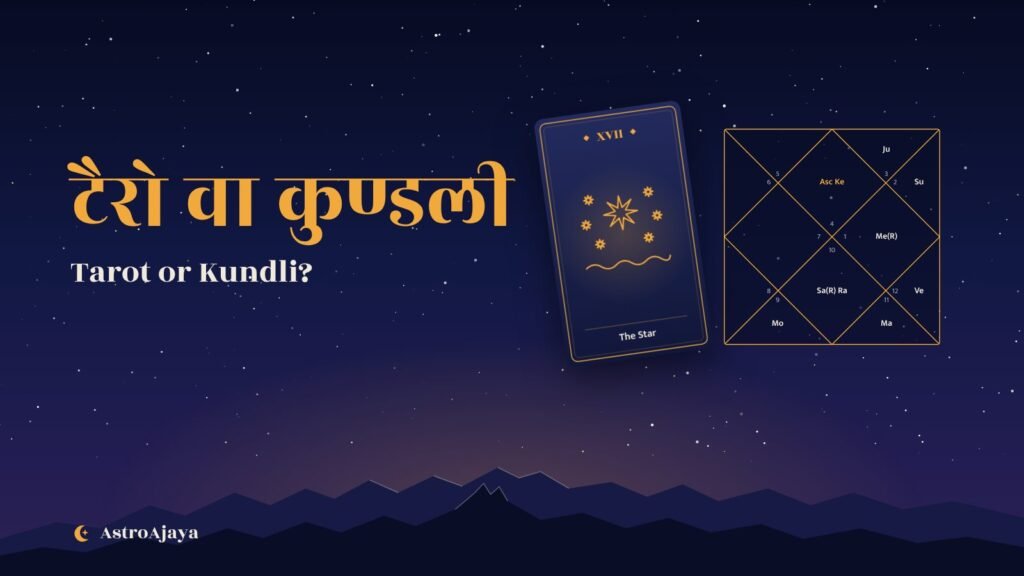
“Should I get my Kundli read, or a tarot reading?” It is one of the questions I am asked most often. I have worked with both for more than ten years, and the honest answer is that they do different jobs. Choosing the right one — or combining them — makes the difference between a vague reading and a clear one.
What a Kundli reading does
Your Kundli is a map of the sky at the exact moment and place you were born. In Jyotish it is read through:
- the Lagna (ascendant), which shapes your body, personality and approach to life;
- the Moon sign and nakshatra, which describe your mind and emotions;
- the twelve houses, each covering an area of life such as career, marriage, money or health;
- the dashas, the planetary periods that switch on different parts of the chart at different times.
Because it is fixed at birth, a Kundli is best for the big picture and for timing: what you are built for, which periods favour marriage or a career move, when a difficult phase will end. It needs your date, time and place of birth.
What a tarot reading does
Tarot works differently. You hold a question in mind, shuffle, and draw cards from a 78-card deck. Each card has a meaning, and its position in the spread — past, present, advice, outcome — tells you how it applies.
Tarot is at its best for a specific question in the next few weeks or months, and for understanding the feelings and forces around a situation: what someone else may be feeling, what is blocking you, what to do next. It needs no birth details at all.
Which questions suit which reading?
| Your question | Best reading |
|---|---|
| What kind of career suits me? | Kundli |
| When is a good time for marriage? | Kundli |
| Should I accept this job offer this month? | Tarot |
| How does he or she feel about me? | Tarot |
| Will my business improve in the coming years? | Kundli, then tarot for the next step |
| We have a proposal — are we compatible? | Kundli Milan |
| What do I need to know about this week? | Tarot |
| Why has everything felt heavy since 2022? | Kundli (dashas and Sade Sati) |
When to combine them
Some of my most useful sessions use both. The chart sets the frame — for example, a Jupiter dasha that supports a job change — and the cards then look at the actual offer in front of you. The Kundli says when; tarot helps with which one and how.
How to ask a good tarot question
The way you ask shapes the answer. A few tips:
- Ask open questions. “What do I need to understand about my relationship?” gives a richer reading than “Will he call?”.
- Keep a time frame. Tarot sees clearly over the next three to six months.
- Ask about yourself. You can ask how a situation stands, but the most useful readings focus on your own choices.
- One question per spread. Mixing career and love in one draw muddies both answers.
Getting the most from a Kundli reading
- Find your exact birth time if you can — the Lagna changes about every two hours. A hospital record, a family member or an old Cheena (horoscope scroll) can help.
- Note a few important dates in your life: a move, a marriage, a job change. They help confirm the chart.
- Come with two or three questions that matter most.
Try both for free
You can draw cards yourself with the free tarot reading — three cards, the Celtic Cross or a quick yes-or-no — and look up any card in the 78 card meanings. For the long view, make your free Kundli and see your Lagna, Moon sign, nakshatra and current Mahadasha.
When you want someone to read it all together with you, book a reading. Tell me your question, and I will suggest whether the chart, the cards or both will serve you best.